Campomaggiore (Potenza)
Old Campomaggiore
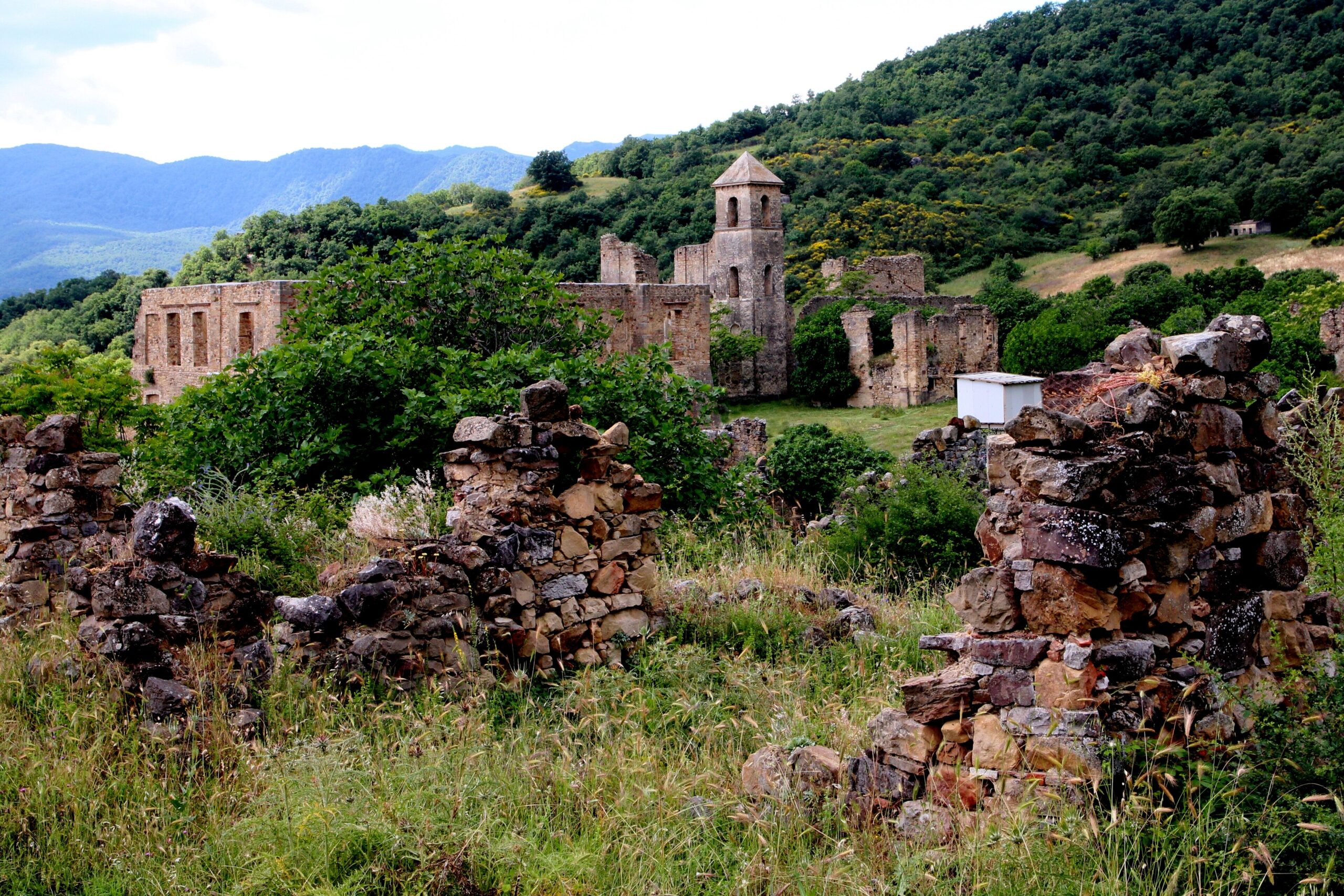
Old Campomaggiore is the «city of utopia»: a village designed from scratch in the 18th century for the Counts Rendina, with grid streets and identical houses, inhabited for over a century and abandoned after a landslide in 1885. Its ruins, in the Gallipoli Cognato – Piccole Dolomiti Lucane Park, about 4 km from today’s village, are among the most evocative places in Basilicata.
- Opening hoursSat-Sun 10-1 and 4-8 (per Italia.it)
- AdmissionTickets and bookings on Lucanya.com
- WhereCampomaggiore Vecchio, Campomaggiore (PZ)
About this place
History
In 1673 the almost deserted fief of Campomaggiore was granted to the Rendina family, who received the title of count on condition that they repopulate it. Count Teodoro Rendina commissioned the new village from architect Giovanni Patturelli, a pupil of Luigi Vanvitelli.
To attract settlers, the Rendina offered a house and two tomoli of land for olives or vines, plus the right to cut timber for building, in exchange for labour and feudal dues; they brought in workers from Bitonto to plant olive trees. On 20 November 1741 the first sixteen families pledged with the counts to build the village, and by the end of that year Campomaggiore welcomed its first residents. The main square was named Piazza dei Voti («Square of the Vows») in memory of that pact.
The village grew for over a century: in 1833 it had about 1,500 inhabitants and was among the first in the area to have a railway station, a cemetery, a large fountain-washhouse and several olive presses. But the site was marshy, and on 2 February 1885 a landslide destroyed it. Legend says Our Lady of Mount Carmel, the village’s protector, warned two farmers of the coming disaster, allowing the people to escape.
A «utopia»?
Campomaggiore is often linked to the ideal-community theories of Robert Owen and Charles Fourier, but historians point out that those ideas spread decades after its foundation: rather than a social experiment, it was an enlightened feudal project to repopulate and farm the land.
What to see
- The grid plan, with streets crossing at right angles, still legible among the ruins and vegetation.
- Piazza dei Voti, with the remains of the church and the counts’ palace facing each other.
- Art installations and information panels that help you imagine life in the village before the landslide.
- Dance and theatre performances and evening light-and-story trails, when scheduled.
Useful information
According to Italia.it, visits are possible on Saturdays and Sundays, 10:00–13:00 and 16:00–20:00; the site is closed on weekdays. The official site is campomaggiorecittadellutopia.it. Times may change, so check before you go. The site has repeatedly been nominated for the FAI «Places of the Heart» and opened for the FAI Spring Days 2023.
Visit also the new village of Campomaggiore, rebuilt after the landslide.