Things to see · Churches and sanctuaries
Convent of San Francesco, Pietrapertosa
Pietrapertosa (Potenza)
Convent of San Francesco, Pietrapertosa is in Pietrapertosa, province of Potenza. Opening hours: About 10:00–13:00 and 15:30–18:00; times may change with the season. Admission: Free entry.
- Free entry.
- About 10:00–13:00 and 15:30–18:00; times may change with the season.
About this place
The Convent of San Francesco stands in the lower part of Pietrapertosa, a little apart from the centre, with a terrace that opens onto the Lucanian Dolomites. It houses one of the most important fresco cycles in Basilicata.
History
It was founded in 1474 by the Franciscan Friars Minor of the Observance (Frati Minori Osservanti), at the wish of Pope Sixtus IV. The convent is built around a square cloister; the church, beside the western side, was enriched with frescoes and paintings in the 16th and 17th centuries.
What to see
• The single-nave church, with a wooden trussed ceiling and a raised presbytery, separated by a large pointed arch.
• The presbytery frescoes: two large panels with scenes from the New Testament and the life of Saint Francis, painted in the early 16th century by a painter who signed himself Ioannis Luce de Ebulo, Giovanni Luce da Eboli.
• The 17th-century canvases, including a painting by Giovanni De Gregorio, known as il Pietrafesa, from 1631, and the Immacolata by Filiberto Guma from 1628.
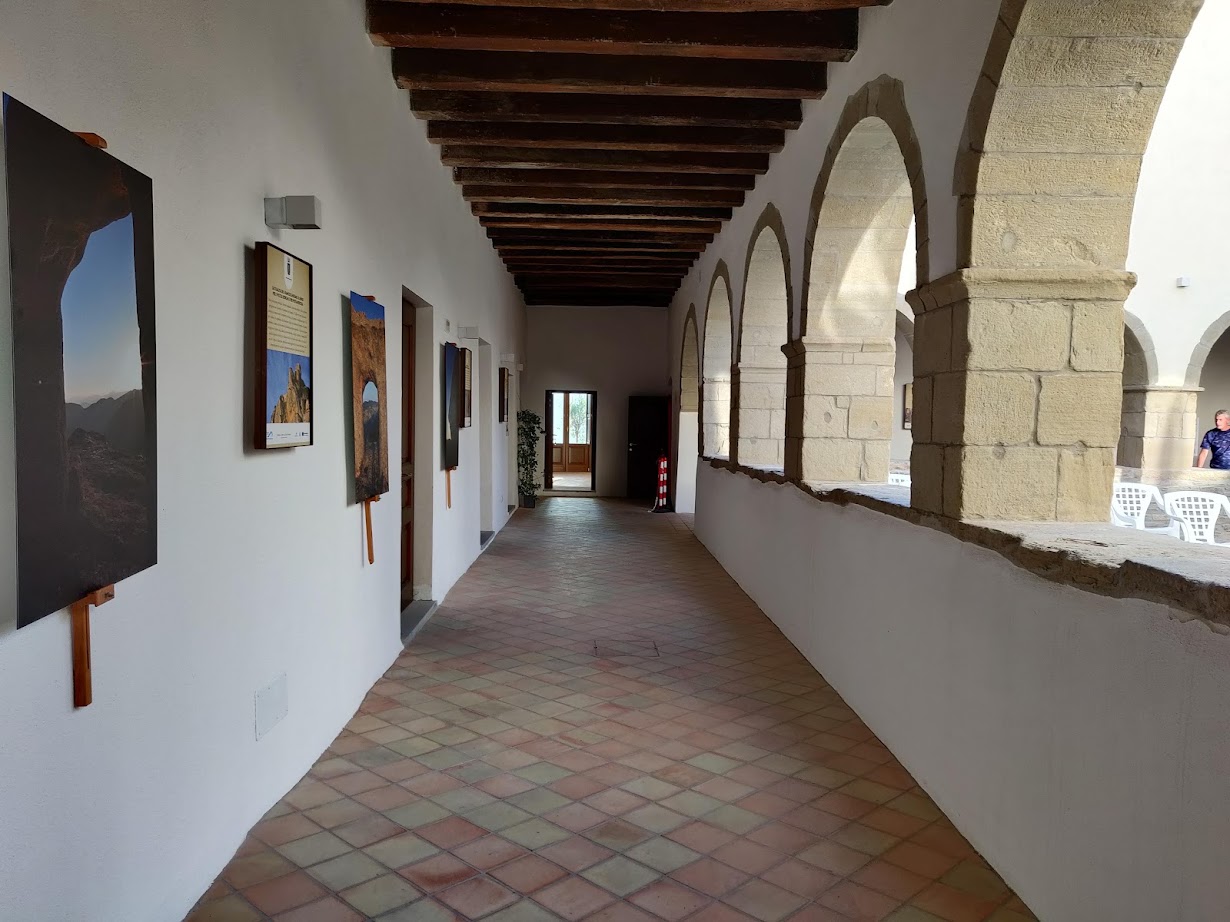
• The cloister, with a well at its centre between stone colonnettes; from the ambulatory you can see remains of the vaults, which were once frescoed.
• The panoramic terrace in front of the convent.
How to get there
From the centre, it’s a walk of about ten minutes down via Sant’Angelo. You can also reach it by car, with a few parking spaces nearby.
Useful information
• Parts of the complex, such as the cloister, may be closed for restoration.
• It is a place of worship: please visit quietly and without flash on the frescoes.
• In the village centre you’ll find the Mother Church of San Giacomo Maggiore, and up high, the castello normanno-svevo.