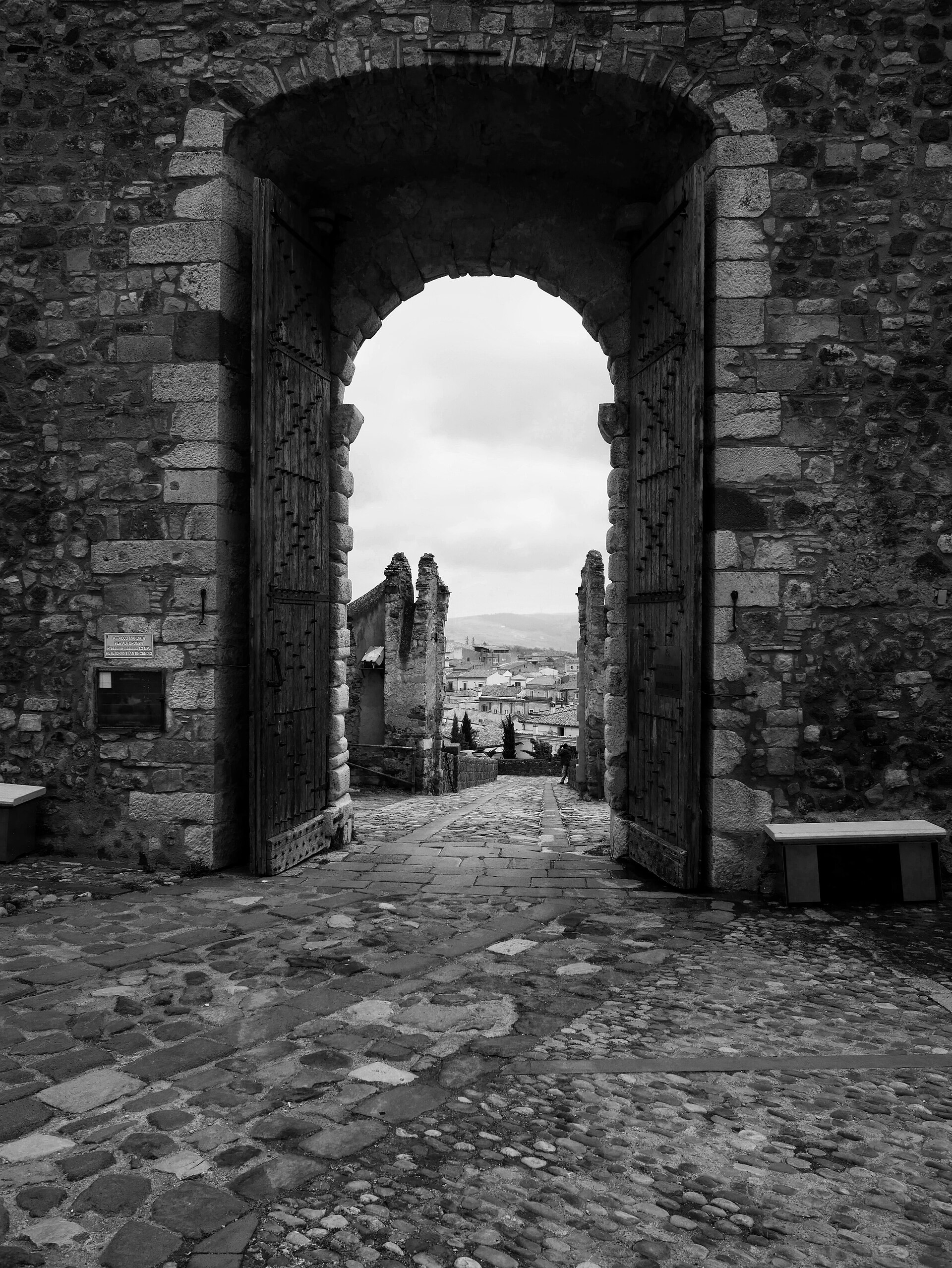
Melfi (Potenza)
Melfi Castle
Melfi Castle, in Basilicata, overlooks the town’s historic centre from a strategic hill at the foot of Mount Vulture. It is one of the most important medieval castles in Southern Italy: originally built as a Norman fortress, it was remodelled by the Swabians and the Angevins and, following further alterations, became a fortified residence. Today it houses the ‘Massimo Pallottino’ National Archaeological Museum of the Melfi Area.
- WhereCastello di Melfi
History
Sources date the first fortified structure to between the late 11th and 12th centuries, during the Norman conquest of Southern Italy. The oldest core is attributed to the Normans, who chose Melfi for its strategic position controlling the communication routes between Puglia, Campania, and Basilicata.
The castle also played an important role under Frederick II of Swabia, who resided in Melfi and made the city one of the centers of his power in southern Italy. It was here that political meetings and ecclesiastical assemblies were held; most notably, Melfi is linked to the Constitutions of Melfi, promulgated in 1231. This body of laws, also known as the Liber Augustalis, reorganized the Kingdom of Sicily and strengthened the sovereign’s authority.
Under the Angevins, following the end of the Swabian dynasty, the castle was expanded and adapted for residential and defensive purposes. In the centuries that followed, it underwent further modifications and changes in ownership: it gradually lost its role as the political center of the kingdom, but continued to be used as a fortification and manor residence. Earthquakes, transformations, and restorations have altered its appearance over time.
Architecture
The original Norman nucleus had a compact, quadrangular layout, with towers at the corners. The current building is the result of several construction phases: as a result, it features medieval elements alongside later interventions, rather than a uniform design.
The complex is arranged around courtyards and includes towers, walls, buildings, and interior passageways. The towers, which vary in shape and size, were used to watch over the territory and defend the most vulnerable points; the elevated position and fortifications made it possible to control access to the city and the surrounding landscape. Even today, the whole complex conveys the castle’s dual nature: a military stronghold and a ceremonial residence.
The Museum and the Visit
Inside is the “Massimo Pallottino” National Archaeological Museum of the Melfi Area, established in 1976. The collections tell the ancient history of the territory, with artifacts from the Melfi area and surrounding regions: evidence of the indigenous populations, the Greek presence, and relations with the Roman world. The museum thus provides a broader context for the visit: the medieval castle stands in a territory that was inhabited and frequented long before it was built.
In short, Melfi Castle is at once a Norman monument, a Swabian and Angevin residence, and a museum site: its importance lies as much in its position and architecture as in its link with Frederick II and the legislative history of the Kingdom of Sicily.