Things to see · Castles and fortresses
Norman-Swabian Castle of Pietrapertosa
Pietrapertosa (Potenza)
Norman-Swabian Castle of Pietrapertosa is in Pietrapertosa, province of Potenza. Opening hours: Seasonal openings, longer in summer and at weekends; in October Saturday and Sunday only, 10:00–17:30. Off season it may be closed: check with the Pro Loco before going up. Admission: Admission charged; check the price with the Pro Loco.
- Admission charged; check the price with the Pro Loco.
- Seasonal openings, longer in summer and at weekends; in October Saturday and Sunday only, 10:00–17:30. Off season it may be closed: check with the Pro Loco before going up.
About this place
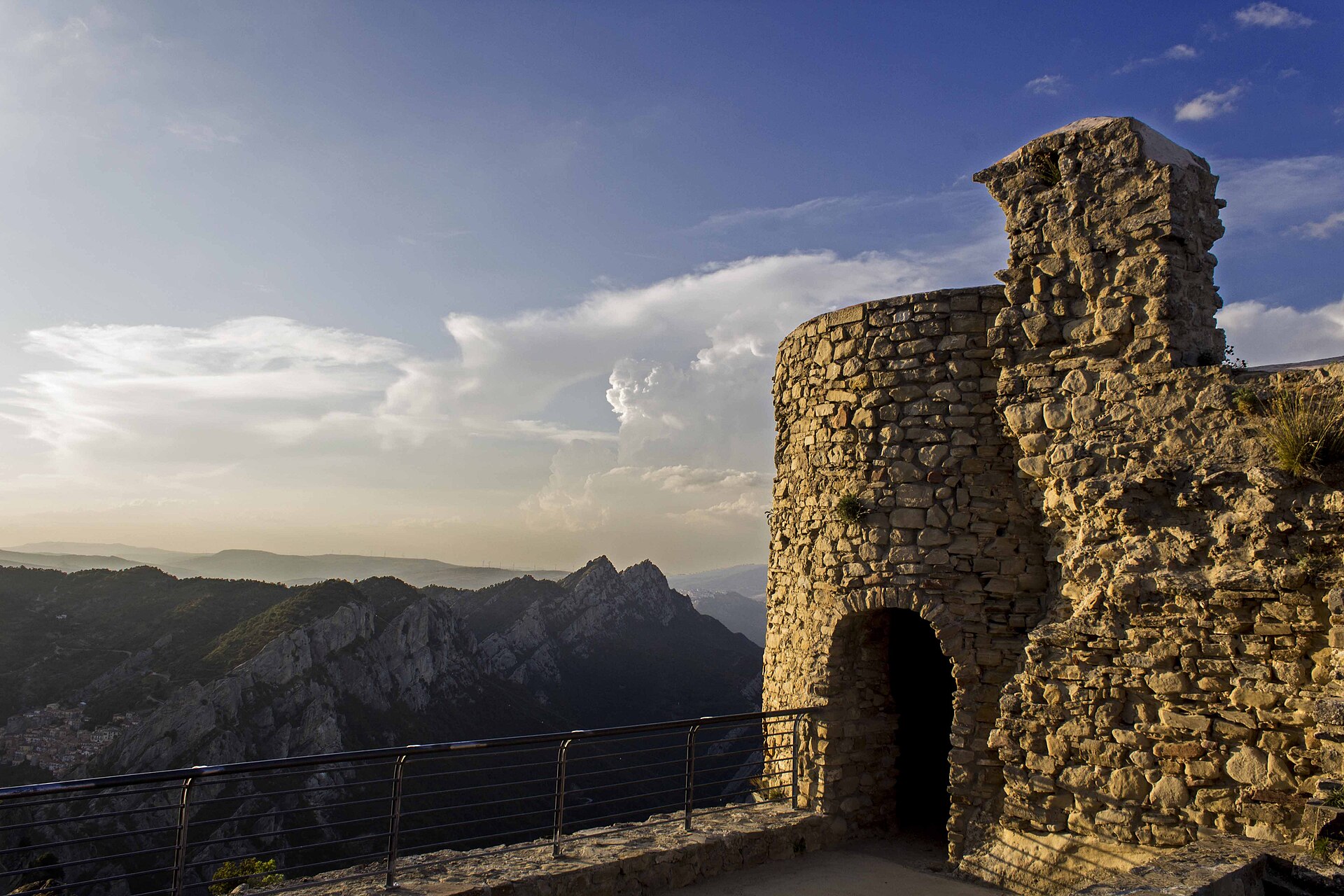
The Norman-Swabian castle occupies the highest part of Pietrapertosa, at about 1,150 metres, clinging to the sandstone spires of the Lucanian Dolomites. From up here you can take in the whole village, the Basento valley and, opposite, the rocks of Castelmezzano.
History
The first records of a fortification at Pietrapertosa date back to the early 11th century, in a document from the Byzantine catapan (governor) Gregorio Tarchaneiotes. According to tradition, the stronghold was also used by the Saracens led by the warlord Bomar, who settled in the nearby Arabata quarter. The castle is mentioned in the Norman Catalogus Baronum in the second half of the 12th century, and in Angevin records of 1278, when it was granted to Guglielmo de Tournespée. It then passed to several feudal families, including the Carafa, Aprano, Suardo, Jubero and Sifola, turning from a fortress into a baronial residence. Abandoned in the 19th century, it suffered collapses and partial demolition after the First World War.
The castle today
A restoration using modern, removable structures has made it open to visitors again. Archaeological excavations have uncovered the original staircase and three phases of expansion of the walls towards the entrance portal, as well as a semi-rock-cut room, a large underground chamber divided by a stone arch and a small stable carved into the rock. In the deepest cistern, buried in mud, the remains of a small medieval wooden throne were preserved.
What to see
• The staircase carved into the rock, which climbs to the top of the peak.
• The lookout post, isolated on a spire, from which sentries watched over the valley.
• The two cisterns for rainwater, and the walls with traces of the wooden beams of medieval construction.
• The terrace below the walls, with an early medieval necropolis of arched tombs cut into the stone.
• The view over the Lucanian Dolomites, one of the most spectacular in Basilicata.
Getting there
• On foot: from the centre, climb the lanes of the Arabata, following the signs for the castle. The final stretches are steep and made of steps.
• By car: park at the entrance to the village, near the cappella di San Cataldo (Chapel of San Cataldo), and continue on foot.
Useful information
• Sturdy shoes with good soles are essential: the steps cut into the rock can be slippery.
• In strong wind or rain, visits may be suspended.
• On the same day you can combine the Volo dell’Angelo (Angel’s Flight), the Percorso delle Sette Pietre towards Castelmezzano and the vie ferrate (via ferrata climbing routes). To plan your visit, read our guide to the Lucanian Dolomites.