Travel guide · Basilicata
Appennino Lucano National Park: a guide to the Val d’Agri and Lagonegrese
Appennino Lucano – Val d'Agri – Lagonegrese National Park: Sirino and Volturino, Lake Pertusillo, Laudemio, Grumentum, Viggiano, villages and food.
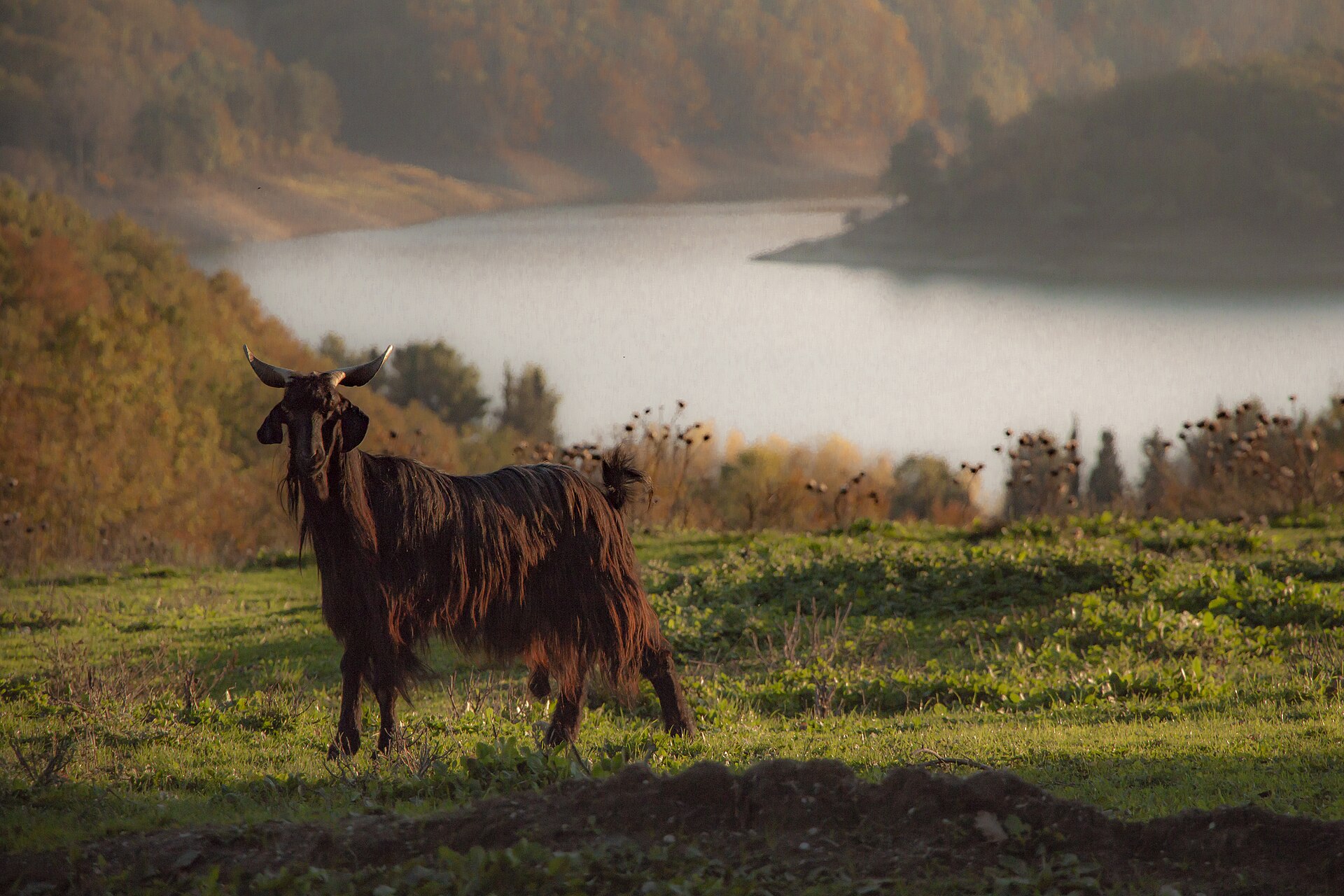
Foto: GianluigiLocoCasella – CC BY-SA 4.0, Wikimedia Commons
The Appennino Lucano – Val d’Agri – Lagonegrese National Park is Basilicata’s second national park, after Pollino. Established in 2007, it protects about 69,000 hectares of mountains, forests, rivers and lakes in 29 towns of the province of Potenza, between Pollino Park to the south and Cilento to the west. Its heart is the upper Agri valley, with peaks over 1,800 metres, the Laurenzana fir forest, Lake Pertusillo and the ancient Roman city of Grumentum. In this guide you’ll find the park’s towns, mountains, lakes, places of history and faith, activities and flavours.
The park’s towns
The park covers four main areas: the upper Val d’Agri, the Val Camastra, the upper Val Melandro and the Lagonegrese, with the Sirino massif. Among its towns:
The mountains
- Sirino massif: the park’s highest peak is Monte Papa (2,005 m), above Lagonegro and Nemoli. In winter it is the snow mountain, in summer the mountain of trails and small glacial lakes.
- Monte Volturino (1,835 m): it overlooks the upper Val d’Agri and the ridge that runs to Monte di Viggiano; large beech forests cover its slopes.
- Monte Raparo and Raparello: between San Chirico Raparo and the Sinni valley, with sinkholes, caves, springs and traces of prehistoric animals.
- Monte Caldarosa: on its northern side lies the Laurenzana forest, with one of the most important silver fir woods in the Apennines.
Lakes and waters
Lake Pertusillo
Lake Pietra del Pertusillo was created in the 1950s by a dam on the Agri river, between Grumento Nova, Spinoso and Montemurro. Surrounded by woods and hills, it is a protected area for waterbirds: you can see grey herons, mallards, coots and, during migration, the black stork. Otters also live along the Agri. You’ll find all the details in the Lake Pertusillo page.
Lake Laudemio and the Sirino
On the Sirino, at about 1,500 metres, lies Lake Laudemio, of glacial origin and considered the southernmost glacial lake in Europe. It is a regional nature reserve surrounded by beeches and alders: perfect for an easy walk, even with children. Further down, near Nemoli, is Lake Sirino.
Lake Pantano di Pignola
Near Potenza, Lake Pantano di Pignola is a nature reserve visited by many migrating birds, with paths and viewing points. Nearby is the Rifreddo forest, one of the park’s old-growth beech woods.
Forests and nature
- Abetina di Laurenzana: a regional reserve with centuries-old silver firs, some with trunks about 4 metres round, mixed with beeches and Turkey oaks.
- Bosco Faggeto di Moliterno: a beech-wood nature oasis just outside the village.
- Wildlife: the park is home to wolves, wildcats, porcupines, deer and otters; birds include the red kite, golden eagle, raven and black stork. Rare amphibians such as the spectacled salamander and the Apennine yellow-bellied toad live in the streams.
- Flowers: in spring meadows and clearings fill with wild orchids; rare plants named after the mountain grow on the Sirino.
History, art and faith
Grumentum, the Roman city
Near Grumento Nova you can visit the archaeological park of Grumentum, one of the most important Roman cities in Lucania, with its theatre, amphitheatre, forum, baths and paved streets. The National Archaeological Museum of the Upper Val d’Agri, in Grumento Nova, tells the valley’s story from prehistory to Roman times.
Viggiano and the Black Madonna
Viggiano is the home of the Black Madonna, patron saint of Basilicata. Every year the statue is carried in procession up to the sanctuary on the Sacro Monte, at over 1,700 metres, in May, and returns to the village in September: two of the region’s most heartfelt religious festivals. Viggiano is also the home of the folk harp: for centuries its players travelled across Europe and the world.
The villages
The park is full of hilltop old towns: Marsico Nuovo with its churches and old centre, Brienza with the Caracciolo castle towering over the village, Moliterno with its castle and the fondaci where canestrato cheese ripens, Sasso di Castalda with the Ponte alla Luna, a Tibetan bridge hanging over the woods, and Tramutola, Sarconi, Paterno, Lagonegro and Rivello. Several churches in the area keep 16th-century frescoes by the painter Giovanni Todisco.
Things to do
- Hiking: from the beech forests of the Volturino to the trails of the Sirino and Raparo, there are routes for every level. Always check signs and weather.
- Snow: in winter you can ski on the Sirino, above Lagonegro, and at the Sellata, near Abriola, with downhill and cross-country runs and snowshoe routes.
- Cycling: the Val d’Agri and the roads around Lake Pertusillo are great by road or mountain bike: find ideas in our guide Basilicata by bike.
- Adventure: the Ponte alla Luna at Sasso di Castalda and, just outside the park, the Tibetan bridge of Castelsaraceno.
- Birdwatching: at Lake Pertusillo and Lake Pantano di Pignola, especially in spring and autumn.
Flavours of the park
The Val d’Agri is one of the tastiest corners of Basilicata: canestrato di Moliterno PGI, Sarconi beans PGI, the wines of the Terre dell’Alta Val d’Agri DOC, cured meats, mushrooms, chestnuts and hand-made pasta. Find them all in our guide Lucanian flavours.
When to go and tips
- Spring and autumn: the best months for trails, flowers, autumn colours in the beech forests and birdwatching.
- Summer: cool air at altitude, lakes, village festivals and the Black Madonna’s sanctuary open on the Sacro Monte of Viggiano.
- Winter: snow on the Sirino and at the Sellata; at altitude you need chains or winter tyres.
- Getting around: a car is essential. From Potenza you drive down into the Val d’Agri; from the Tyrrhenian coast and the motorway you arrive via Lagonegro. For the valley’s towns and events open the Val d’Agri area.